A Taste of the Maldives for Your Guests
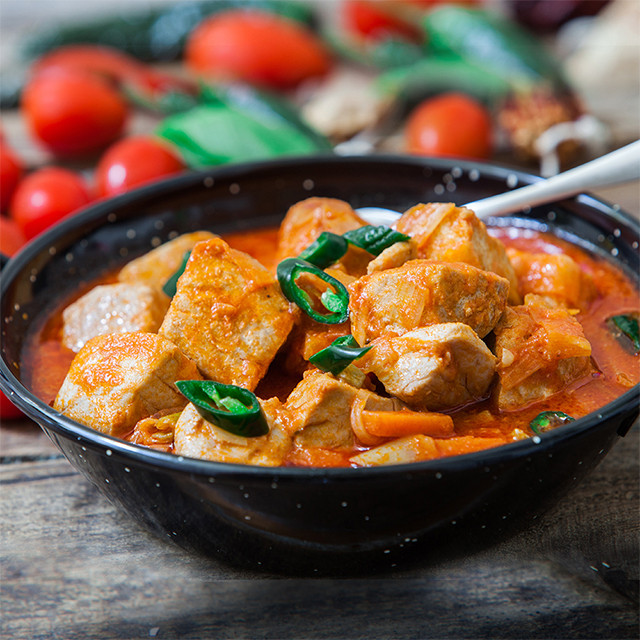
Tuna curry, known locally as mas riha, is arguably the most important dish in Maldivian cuisine. It is served daily in homes across the archipelago, and no authentic Maldivian dining experience is complete without it. For resort kitchens looking to offer guests a genuine taste of local culture, this is the dish to master.
This recipe has been adapted for commercial kitchen operations. We have scaled it to serve 10 as a base unit, included notes for bulk preparation, and highlighted where ingredient quality makes the biggest difference.
The Foundation: Choosing the Right Tuna
The single most important decision in this recipe is the tuna itself. Maldivian tuna curry traditionally uses skipjack tuna (kalhubilamas), which has a firmer texture and more robust flavor than yellowfin when cooked in curry. The flesh holds together through simmering without becoming mushy, essential for a presentable plated dish.
What to look for:
- Fresh skipjack tuna, ideally pole-and-line caught
- Loins or thick steaks, minimum 2 cm thickness
- Bright red flesh with no browning or off-odor
- If fresh is unavailable, high-quality frozen skipjack loins work well, thaw slowly under refrigeration overnight
Chef's note on sizing: In local households, tuna is often cut slightly smaller (approx. 2-3 cm) to ensure the salt and spices penetrate to the core of the dense skipjack flesh. For a resort "Chef's Spotlight," 4 cm cubes are better for presentation, but ensure they marinate for the full 15 minutes.
Explorica supplies MSC-certified Maldivian skipjack tuna year-round. Ask our support team about our fresh tuna delivery schedule for your atoll.
Ingredients (Serves 10)
Protein
- 1.5 kg fresh skipjack tuna, cut into 4 cm cubes
- 1 tablespoon salt (for pre-seasoning)
- 1 teaspoon ground turmeric (for pre-seasoning)
Aromatics and Spice Paste
- 3 tablespoons coconut oil
- 2 large onions, finely sliced (about 300 g)
- 8 cloves garlic, minced
- 3 cm piece fresh ginger, finely grated
- 15 fresh curry leaves (2-3 sprigs)
- 4 green chilies, slit lengthwise (adjust to heat preference)
- 2 dried red chilies, broken in half
Chef's note on chili choice: Authentic mas riha usually uses Githeyo Mirus (Maldivian Scotch Bonnet). If your resort has access to these, they provide a specific floral heat that standard green chilies lack.
- 1 cinnamon stick (5 cm)
- 6 cardamom pods, lightly crushed
- 1 teaspoon fenugreek seeds
- 1 teaspoon mustard seeds
Spice Blend
- 2 tablespoons Maldivian curry powder (dhivehi havaadhu)
- 1 teaspoon ground turmeric
- 1 teaspoon ground cumin
- 1 teaspoon ground coriander
- 1/2 teaspoon freshly ground black pepper
- 1/2 teaspoon ground fennel
Liquid and Finishing
- 400 ml thick coconut milk (first press)
- 200 ml thin coconut milk (second press) or coconut cream diluted with water
- 3 tablespoons Maldivian fish paste (rihaakuru), or substitute with Marmite, or a mix of fish sauce and a drop of dark soy/anchovy paste for the thick, umami-rich depth
- 200 g fresh tomato, diced (about 2 medium tomatoes)
- Juice of 2 limes
- 10-12 fresh pandan leaves (ranbaa), tied in a knot
- Salt to taste
Preparation Method
Step 1: Season the Tuna
Rub the tuna cubes with salt and turmeric. Set aside at room temperature for 15 minutes. This firms the exterior slightly and helps the pieces hold their shape during cooking.
Step 2: Build the Aromatic Base
- Heat coconut oil in a heavy-bottomed pan or rondeau over medium heat
- Add mustard seeds and fenugreek seeds, cook until the mustard seeds begin to pop (about 30 seconds)
- Add the cinnamon stick, cardamom pods, and dried red chilies, toast for another 30 seconds until fragrant
- Add sliced onions and cook, stirring occasionally, until soft and golden (8-10 minutes). Do not rush this step, the sweetness of properly caramelized onions is critical to the final flavor
- Add garlic, ginger, curry leaves, and green chilies. Cook for 2 minutes until the raw garlic smell subsides
Step 3: Bloom the Spices
- Reduce heat to medium-low
- Add the curry powder, turmeric, cumin, coriander, black pepper, and fennel
- Stir continuously for 60-90 seconds. The spices should darken slightly and become very fragrant. If the mixture looks dry, add a splash of the thin coconut milk to prevent burning
- Add diced tomato and cook for 3-4 minutes until the tomato breaks down into the paste
Step 4: Build the Curry
- Pour in the thin coconut milk and the rihaakuru (or your chosen substitute)
- Add the knotted pandan leaves
- Bring to a gentle simmer and cook for 5 minutes to let the flavors meld
- Add the thick coconut milk and stir to combine
- Return to a gentle simmer, do not boil vigorously, as this can cause the coconut milk to split
Step 5: Cook the Tuna
- Gently slide the seasoned tuna cubes into the curry
- Ensure all pieces are submerged, add a small amount of water if needed
- Simmer gently for 12-15 minutes. The tuna is done when it is opaque throughout but still moist. Overcooking will make it dry and chalky
- Remove from heat and let the curry rest for 5 minutes, it will continue to develop flavor as it sits
Step 6: Finish and Season
- Remove the pandan leaf knot and cinnamon stick
- Squeeze in lime juice and stir gently
- Taste and adjust salt. The rihaakuru adds significant salinity, so be conservative
- If the curry is too thick, thin with a small amount of warm water. If too thin, simmer uncovered for 2-3 minutes before adding the tuna
Plating and Serving Suggestions
Traditional Style
Serve in a shallow bowl over steamed basmati rice with:
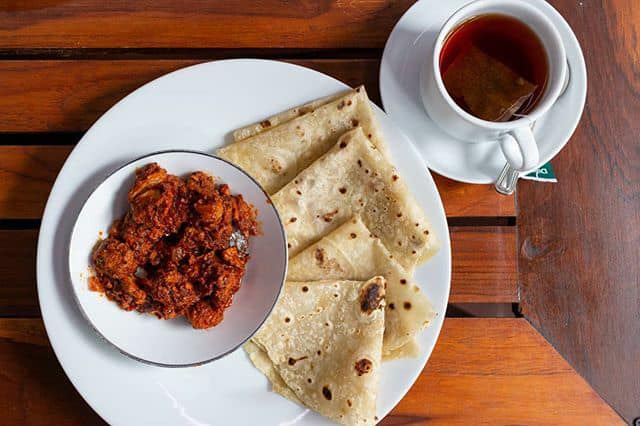
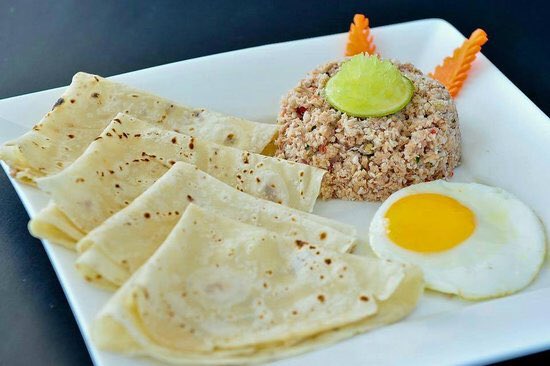
- Roshi (Maldivian flatbread) on the side
- Sliced fresh chili and lime wedges
- A small dish of lonumirus (chili paste with onion and lime)
Fine Dining Presentation
- Mound fragrant jasmine or basmati rice in the center of a warm shallow bowl
- Place 3-4 tuna pieces around the rice
- Ladle curry sauce around (not over) the fish
- Garnish with a fresh curry leaf sprig, a thin slice of green chili, and a micro-fine lime zest curl
- Finish with a small drizzle of virgin coconut oil for sheen
Buffet Service
- Hold in a chafing dish or bain-marie at 63 degrees C minimum
- Keep the tuna pieces in the curry to maintain moisture
- Place accompaniments (rice, roshi, condiments) in adjacent stations
- Label as: "Maldivian Tuna Curry, Pole-and-Line Skipjack, Coconut, Curry Leaf"
Scaling for Commercial Kitchens
Batch Sizes
- 25 covers: Multiply all ingredients by 2.5. Use a 20-liter tilt pan or large rondeau
- 50 covers: Multiply by 5. Prepare the spice paste in bulk and cook curry base in a steam-jacketed kettle
- 100+ covers: Prepare the aromatic base and curry sauce ahead (holds well for 24 hours refrigerated). Cook tuna in batches and combine at service time to prevent overcooking
Prep-Ahead Notes
- The aromatic paste (step 2-3) can be prepared up to 2 days in advance and refrigerated
- The curry base without tuna (through step 4) holds for 24 hours refrigerated
- Do not add tuna until 20 minutes before service, reheated tuna loses texture rapidly
- Coconut milk sauces may separate when refrigerated; whisk gently over low heat to re-emulsify
Key Ingredients to Stock
The two hardest-to-source ingredients for this dish are Maldivian curry powder (dhivehi havaadhu) and rihaakuru (concentrated fish paste). Both are essential for authenticity, generic curry powder will produce a different flavor profile entirely. If rihaakuru is unavailable, Marmite or a mix of fish sauce with a drop of dark soy/anchovy paste mimics the thick, umami-rich, "funky" depth better than plain fish sauce alone.
Explorica carries both products in commercial quantities. Dhivehi havaadhu is available in 500 g and 1 kg packs. Rihaakuru is available in 250 ml and 1-liter bottles. Both have a long shelf life when stored properly.
A Note on Authenticity
Every Maldivian household has their own version of mas riha. Some add more tomato, some skip the pandan, some use thinly sliced onion rings instead of diced. This recipe represents a balanced, widely-accepted preparation that works reliably in a commercial setting, but we encourage your chefs to experiment and develop their own house version.
The one non-negotiable: use good tuna. Everything else is flexible.
Sourcing Through Explorica
All the core ingredients for this recipe, skipjack tuna, coconut milk, dhivehi havaadhu, rihaakuru, curry leaves, pandan, and coconut oil, are available through your regular Explorica order. Contact our support team to add these items to your standing order, or request a sample pack if you are trialing this dish for the first time.